How It Works · Moss Landing, California
What Moss Landing actually tells us about battery safety.
The fire everyone heard about, and the decade of engineering that makes it a story about the past, not the future.
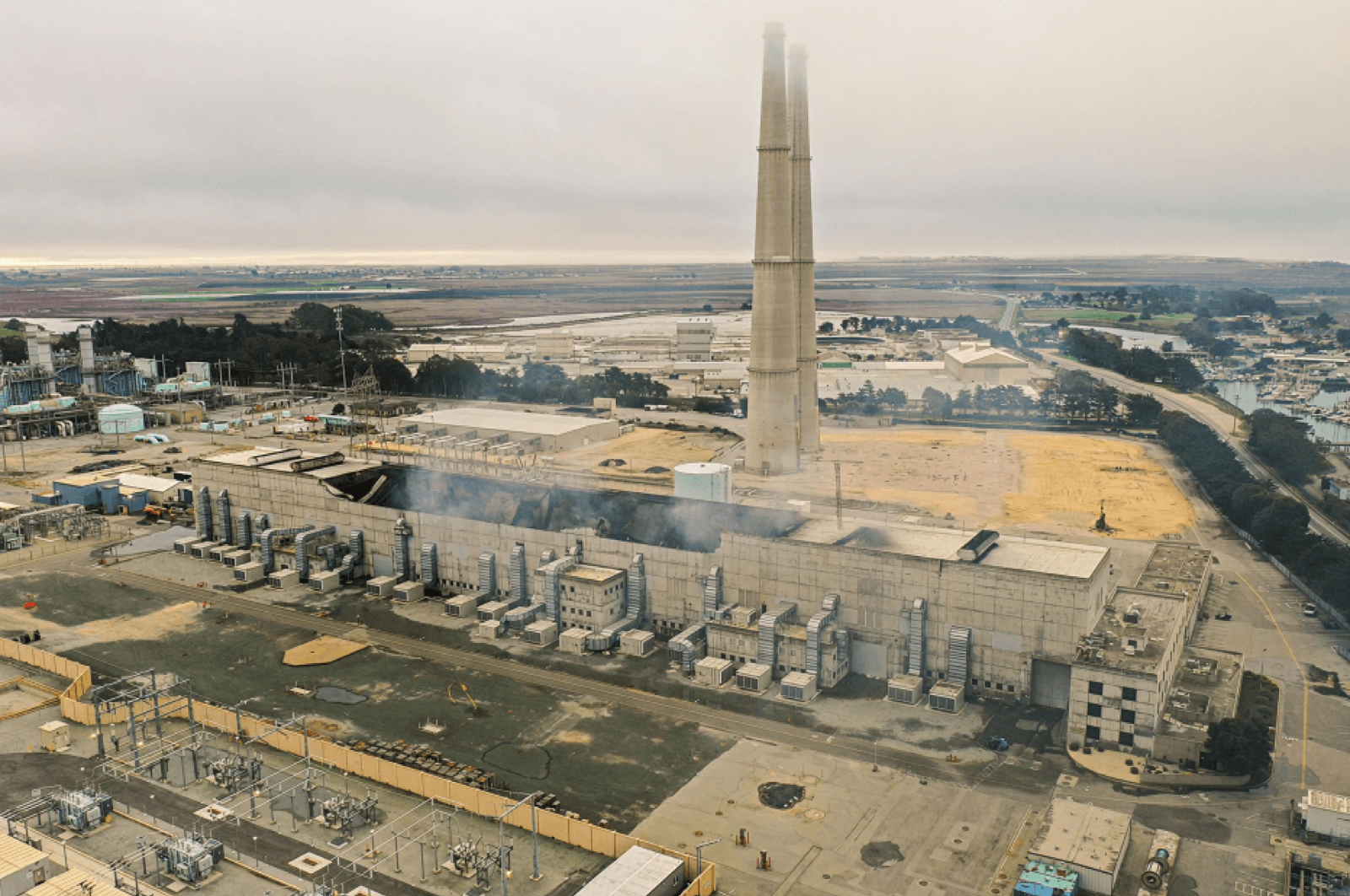
In January 2025, a fire at the Moss Landing Energy Storage Facility put grid batteries on the front page. If your only exposure to battery storage is that headline, the takeaway feels obvious: batteries are risky. The engineering record says something much more specific, and much more useful.
The fire was a 2018 design, not a 2026 one
Moss Landing's burned facility used nickel-manganese-cobalt (NMC) batteries, an energy-dense chemistry developed for electric vehicles, packed inside a single 1950s-era turbine building. That design is globally unique, and no modern plant replicates it. The most prominent US battery fires share the same fingerprint: early-generation NMC systems from facilities built around the same era.
The industry already moved
The grid storage market shifted years ago to lithium iron phosphate (LFP), a chemistry with fundamentally better safety metrics. Tesla switched its Megapack product to LFP in 2021. Modern projects use modular containers engineered so a thermal event in one unit stays in one unit: when a fire broke out at the Tesla-based project next door to Moss Landing in 2022, it never spread beyond a single container.
And the code caught up
In March 2025, the CPUC adopted General Order 167-C, setting new fire-safety standards for battery facilities in California, on top of NFPA 855. Every battery MYNT specifies is LFP, in modular enclosures, engineered to the code that exists now. Not 2019's rules.
That's the real Moss Landing story: a first-generation design retired by an industry that learns fast. The batteries going onto California roofs today are a different machine, and the grid needs every one of them.
Sources: SEIA · BloombergNEF · Canary Media · CPUC GO 167-C. Verified June 2026.