The grid goes down. The lights don’t.
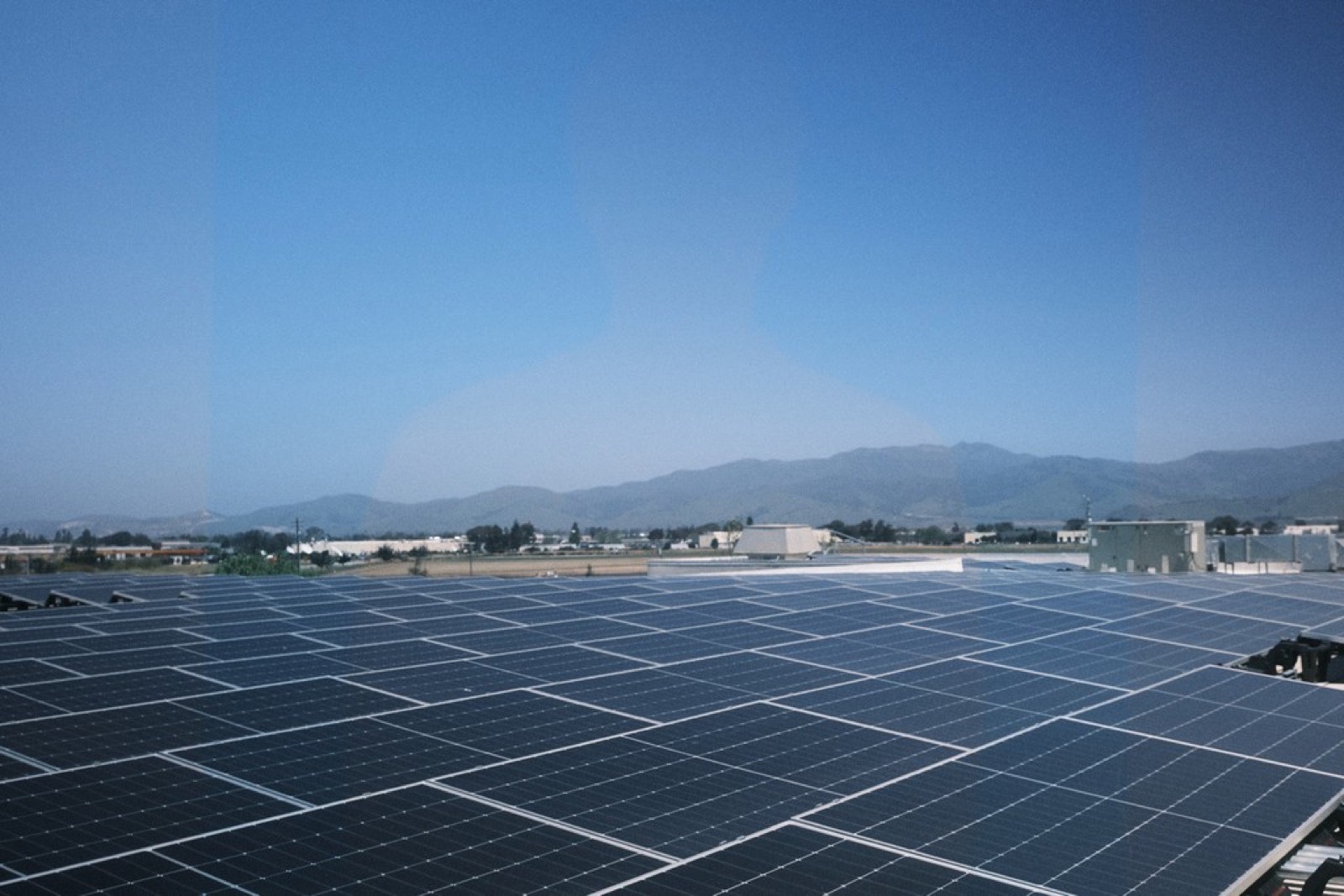
When the grid goes down, a microgrid notices before you do: it detects the outage, disconnects your facility from the utility in a controlled way, and keeps your critical loads running on solar + battery until power returns. That’s islanding, and it’s the whole point. We’ve built it at public scale: the County of Monterey runs on a MYNT-built 1.4 MW microgrid backed by 2,100 kWh of battery storage.
How does a microgrid keep a facility running in an outage?
It notices before you do. Three things happen, in order, faster than you can walk to the breaker panel.
Detect. Disconnect.
The controller senses the utility has dropped and opens the point of interconnection: a controlled disconnect, not a crash. Your facility is now an island, safely separated so you can’t backfeed the dead grid.
Island on solar + battery.
The battery picks up your critical loads, and the array recharges it through daylight, so the island keeps running after sunset. When utility power returns and holds steady, the system resynchronizes and reconnects, without you touching anything.
the County of Monterey’s MYNT-built microgrid, islanding at public scale.
of battery storage behind it, carrying the county’s critical loads.
steps between grid failure and a stable island: detect, island, sustain.
Reference build · County of Monterey · /projects/monterey-county
What loads keep running?
The ones you decide can’t stop. During design we split your facility into critical loads (the circuits the island must defend) and everything else. That’s what makes a microgrid affordable: you size the battery for the loads that matter, not for every rooftop HVAC unit. For a county that means emergency operations stay lit; for a plant it might be refrigeration, controls, and network gear.
The critical-loads study is the first real design decision on any microgrid, and it’s one we do with you, walking the panel schedule line by line.
Critical-loads circuit · Right-sized battery · Designed with you

The proof, and the deeper reading.
Common microgrid questions.
How fast is the switch to island mode?
The transfer scheme is engineered around your loads: the system is designed so the loads you designate as critical ride through the transition, and everything else re-energizes in a controlled sequence. The exact scheme, and what rides through versus what restarts, is set during design, not discovered during the first outage.
How long can the facility run islanded?
It depends on three things we size deliberately: the battery's capacity, the solar array's output, and which loads you carry. With daytime sun recharging the battery, a well-sized microgrid can sustain critical loads through multi-day outages. The sizing study models your load profile against local weather to pin that duration down.
Does the whole building have to be on the microgrid?
No, and it usually shouldn't be. Carrying every load means buying a much bigger battery than you need. Instead we separate the loads that genuinely can't stop onto a critical-loads circuit, and the microgrid defends those. That keeps the system affordable while protecting what actually matters.
What does the microgrid do when there’s no outage?
It works. On a normal day the same solar and battery cut your utility bill (solar self-consumption, demand-charge reduction), and the battery's idle capacity can be dispatched into CAISO markets under AMPS. Resilience is the headline, but the economics run every single day, outage or not.
One contract.
Zero handoffs.
Start with a site walk →
Keep exploring: the County of Monterey microgrid, how a battery rides through a blackout, and the payback on commercial solar plus battery.